
Call Now &
Get a Quote
Get a Quote

Smart vinyl and smart laminate are modern flooring options designed for durability, style, and functionality. Here's a quick breakdown:
| Feature | Smart Vinyl | Smart Laminate |
|---|---|---|
| Water Resistance | 100% waterproof | Water-resistant only |
| Scratch Resistance | Excellent | Superior hard surface |
| Impact Resistance | Flexible, absorbs impacts | Rigid, may chip |
| Lifespan | 15–25 years | 20–30 years |
| Material Cost | $1.29–$12.00/sq ft | Generally lower |
| Installation Cost | $1.00–$10.00/sq ft | $1.00–$10.00/sq ft |
Key Takeaway: Choose smart vinyl for moisture-prone areas like kitchens and bathrooms. Opt for smart laminate in drier spaces like living rooms or bedrooms. Both are durable, low-maintenance, and stylish options, but vinyl offers better moisture protection, while laminate has a longer lifespan.
When it comes to water resistance, smart vinyl takes the crown. Its completely waterproof design ensures that spills, leaks, or even flooding won’t harm the flooring. The waterproof core runs throughout each plank, making it an excellent choice for areas prone to moisture, like kitchens, bathrooms, or basements.
Smart laminate, on the other hand, has made strides in handling moisture compared to traditional laminate. Features like waterproof edge sealing and moisture-resistant cores help it stand up to everyday spills. However, it’s not entirely waterproof - exposure to standing water or prolonged moisture can still lead to swelling or damage.
For homes in the Bay Area, where occasional humidity spikes are common, or for households with kids and pets, smart vinyl offers a level of reliability that smart laminate can’t quite match. This is especially relevant in open-concept homes where kitchen moisture might spread into nearby living spaces.
The differences in how these materials handle water set the stage for comparing their performance in resisting scratches and impacts.
Both smart vinyl and smart laminate are built to resist scratches, but they take different approaches to achieve this. Smart vinyl uses a thick wear layer (typically 12 to 20 mils) combined with an aluminum oxide coating. This creates a durable shield against scratches caused by furniture, pet claws, or daily foot traffic.
In contrast, smart laminate relies on its high-pressure laminate (HPL) surface and melamine resin coating. This results in an extremely hard surface that excels at resisting scratches and scuffs. Its superior hardness also means it’s less likely to show dents or marks from heavy furniture or high heels.
Impact resistance is where the two differ more noticeably. Smart vinyl’s flexible construction allows it to absorb impacts effectively, meaning dropped toys or dishes are less likely to cause lasting damage. Smart laminate, with its rigid structure, is more prone to chipping or cracking under heavy impacts, though it still performs well for typical household use.
When it comes to longevity, smart laminate edges out smart vinyl slightly, with an expected lifespan of 20 to 30 years compared to vinyl’s 15 to 25 years. However, both materials are designed to last for decades with proper care.
Smart vinyl is incredibly low-maintenance. Regular sweeping and occasional damp mopping with a pH-neutral cleaner are all it takes to keep it looking great. Its waterproof nature means you don’t have to worry about special treatments or protective coatings.
Smart laminate also requires only basic cleaning with laminate-specific cleaners, thanks to its hard, stain-resistant surface. But it does demand more caution when it comes to moisture. Prolonged exposure to water can lead to damage, so careful management is essential.
Both materials are resistant to fading from UV exposure, making them ideal for homes in sunny areas like Palo Alto, where large windows let in plenty of natural light. Unlike traditional hardwood, neither requires refinishing, which translates to lower upkeep costs and fewer disruptions over time. Ultimately, the main difference lies in how forgiving they are - smart vinyl is more tolerant of water-related accidents, while smart laminate requires a bit more vigilance.
| Performance Factor | Smart Vinyl | Smart Laminate |
|---|---|---|
| Water Resistance | 100% waterproof | Water-resistant with sealed edges |
| Scratch Resistance | Excellent with thick wear layer | Extremely hard surface |
| Impact Resistance | Flexible, absorbs impacts well | Rigid, may chip under heavy impact |
| Expected Lifespan | 15-25 years | 20-30 years |
| Maintenance Level | Minimal, forgiving | Low, but moisture-sensitive |
The upfront cost of smart flooring can vary widely depending on whether you choose vinyl or laminate. Smart vinyl, such as luxury vinyl plank (LVP) or luxury vinyl tile (LVT), typically costs between $1.29 and $12.00 per square foot, with most high-quality options priced between $3.00 and $10.00 per square foot. For example, SMARTCORE Ultra LVP (12-mil wear layer) is priced around $3.59 per square foot, while Style Selections LVP is available for about $1.99 per square foot.
Smart laminate often starts at a lower price point, but premium waterproof options can rival the cost of high-end vinyl.
Professional installation costs, particularly in areas like the Bay Area, range from $1.00 to $10.00 per square foot, depending on factors like room layout, subfloor preparation, and whether existing flooring needs to be removed. For a 1,000-square-foot installation, homeowners can expect total project costs of approximately $5,000 to $17,000 for standard vinyl plank or $6,000 to $20,000 for luxury vinyl plank, including materials and labor. If old flooring must be removed, you’ll likely pay an additional $1.00 to $2.00 per square foot. While these upfront costs might seem steep, the durability and low maintenance of these flooring options add long-term value.
Smart vinyl flooring typically lasts 15 to 25 years, whereas smart laminate flooring offers a lifespan of 20 to 30 years, with premium options reaching up to 30 years. This longevity reduces the need for frequent repairs or replacements, helping homeowners save money over time. Both options require minimal upkeep, which enhances their appeal as a long-term investment and can positively impact resale value for homes in areas like Palo Alto.
Modern buyers are drawn to the realistic wood and stone designs of both flooring types. However, smart vinyl has the added benefit of being waterproof, offering extra protection against moisture-related damage and further minimizing potential repair costs.
| Cost Factor | Smart Vinyl | Smart Laminate |
|---|---|---|
| Material Cost per sq ft | $1.29 – $12.00 | Generally lower than vinyl |
| Professional Installation | $1.00 – $10.00 per sq ft | $1.00 – $10.00 per sq ft |
| Total Project Cost (1,000 sq ft) | $6,000 – $20,000 | $5,000 – $17,000 |
| Expected Lifespan | 15 – 25 years | 20 – 30 years (up to 30 years for premium) |
| Old Flooring Removal | $1.00 – $2.00 per sq ft | $1.00 – $2.00 per sq ft |
| Maintenance | Minimal | Minimal |
When looking at the cost per year of ownership, smart laminate often comes out ahead due to its longer lifespan. However, smart vinyl's excellent moisture resistance can save on repair costs, making both options worthwhile investments for homeowners in the Bay Area.
Modern flooring isn't just about looks or durability anymore - it’s stepping into the world of smart technology. Recent innovations in smart vinyl and laminate flooring are designed to make life easier and more comfortable for homeowners. These floors can now include features like basic heating controls and sensors to monitor environmental conditions, such as temperature or humidity. While these advancements are still evolving, they hint at a future where flooring plays a more active role in home automation.
The idea of connecting your flooring to smart home systems is gaining traction. Imagine controlling heating or monitoring room conditions through platforms like Alexa, Google Home, or Apple HomeKit. While compatibility with these systems is still in its early stages, manufacturers are actively exploring ways to link smart flooring features - like heating controls or environmental sensors - with broader home automation networks. If you already have a smart home setup, it’s a good idea to check whether the smart flooring you're considering will work seamlessly with your devices or can be operated through a user-friendly mobile app. This ensures your flooring not only fits your home but also your tech ecosystem.
Deciding between smart vinyl and smart laminate flooring can feel overwhelming, especially with the constant evolution of designs and technology. Different areas of your home come with unique challenges - think about the heavy foot traffic in kitchens or the moisture issues often found in basements. According to independent tests, vinyl flooring costs about $3.42 per square foot on average, while laminate costs around $2.82 per square foot, making laminate the more affordable option upfront. However, the initial price tag isn’t the whole story. Factors like durability, maintenance, and long-term performance often outweigh the savings from a lower upfront cost. That’s where expert advice becomes essential, helping you weigh these considerations and choose the best option for your home.
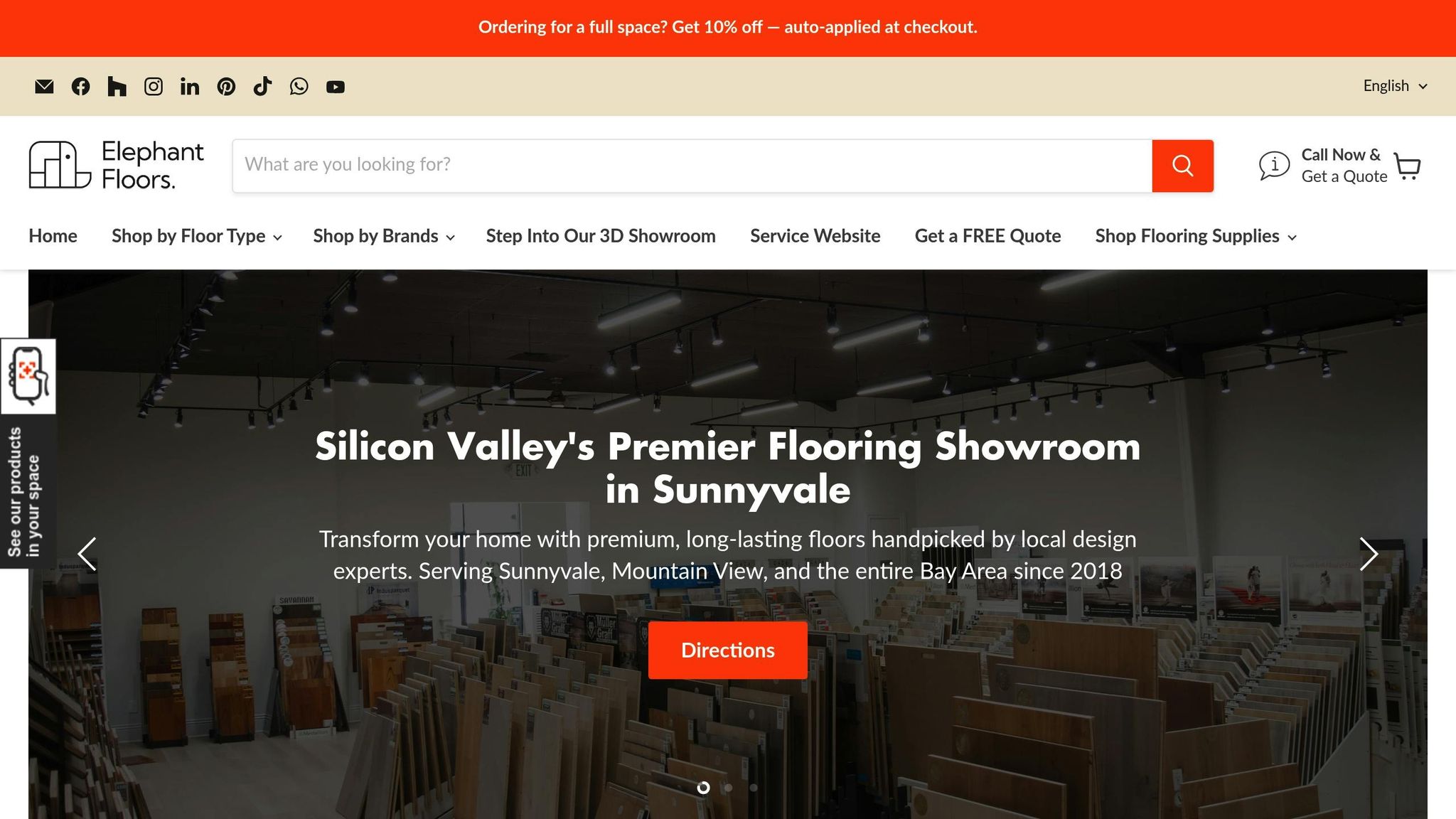
At Elephant Floors' Sunnyvale showroom, Palo Alto homeowners can get a close-up look at premium flooring options from brands like Gaia Flooring, Vellichor, and Medieval Floors. The showroom offers a free sample program, allowing you to take home samples of both smart vinyl and laminate flooring. This lets you see how the colors and textures work with your home’s lighting and décor. You’ll also benefit from one-on-one guidance with specialists who break down the key differences between materials. For example, smart vinyl is fully waterproof, making it ideal for moisture-prone areas, while smart laminate is less suited for such conditions. This hands-on experience helps you make an informed decision based on your specific needs.
After selecting your flooring, you can count on local experts for precise installation and ongoing support. Professional installation is critical, especially when integrating features like heating elements, sensors, and other smart technologies. Elephant Floors' team ensures everything is seamlessly installed while adhering to Bay Area building codes. For homes with basements - a common feature in Palo Alto - the team carefully evaluates subfloor conditions to determine if laminate is suitable, as it should only be installed in completely dry environments. If necessary, they’ll recommend flooring designed for below-grade concrete to protect your investment. Beyond installation, Elephant Floors offers a digital scheduling and quoting system, making it easy to manage your project. This combination of expert installation and continued support ensures your flooring is a durable and smart choice for years to come.
When selecting smart flooring, it's essential to align your choice with your home's specific needs. For areas prone to moisture, like kitchens, bathrooms, and basements, smart vinyl is a standout option. On the other hand, smart laminate thrives in drier spaces such as bedrooms and living rooms.
While laminate flooring often comes with a lower upfront cost, smart vinyl's durability and minimal maintenance can make it a better long-term investment, especially in high-traffic areas. Both materials are compatible with smart home systems and underfloor heating, but their installation requirements vary. Smart vinyl is generally easier to install, tolerating minor imperfections in the subfloor. Laminate, however, demands a dry subfloor and stable climate conditions for proper installation. For homes in Palo Alto, where room conditions may vary, smart vinyl offers greater flexibility.
These considerations build upon the detailed performance analysis discussed earlier, providing a clear framework for selecting flooring that fits your home's unique environment.
Elephant Floors combines premium materials from trusted brands - like Gaia Flooring, Vellichor, and Medieval Floors - with expert guidance tailored specifically for Bay Area homes. Their Sunnyvale showroom lets you compare smart vinyl and laminate options side-by-side, helping you make the best decision for your space.
With a free sample program, you can test materials before committing. Their streamlined digital scheduling and quoting system ensures the entire process, from consultation to installation, is seamless. Plus, their local installation team is well-versed in Bay Area building codes, offering professional service every step of the way. Elephant Floors makes finding the perfect smart flooring simple and stress-free, ensuring it aligns with your home's needs and your long-term goals.
The process of installing smart vinyl flooring and smart laminate flooring has some key differences worth noting:
If you need a versatile solution that works well on slightly uneven surfaces, vinyl is a solid pick. But if you’re after extra insulation and a more classic finish, laminate might be the way to go.
Smart vinyl and laminate flooring can connect effortlessly with modern smart home systems, offering both ease of use and better energy management. These types of flooring often work well with smart heating systems, allowing you to adjust temperatures remotely or set schedules using smart thermostats or home automation apps. This means you can keep your home cozy while using energy more efficiently.
The perks? Lower energy bills, a more comfortable living space, and simplified climate control. For homeowners in Palo Alto, these cutting-edge flooring options not only make everyday life more convenient but also support a greener and more tech-forward lifestyle.
When choosing between smart vinyl and smart laminate flooring, it’s important to weigh factors like durability, water resistance, and the specific demands of each room. Smart vinyl stands out for its strong resistance to moisture and wear, making it an excellent option for high-traffic areas or rooms where spills are common - think kitchens, bathrooms, and entryways. On the other hand, smart laminate provides a more authentic wood-like look, making it a stylish choice for spaces like living rooms and bedrooms where moisture isn’t a major concern.
You might also want to explore tech-friendly features such as simple installation systems and smart home integration to ensure the flooring works seamlessly with your lifestyle. For homeowners in Palo Alto, these considerations can help you find flooring that blends style, practicality, and long-lasting performance for every room in your home.
Leave a comment