
Call Now &
Get a Quote
Get a Quote

Reclaimed wood flooring is a popular choice in the Bay Area for its timeless appeal and eco-friendly benefits. By repurposing wood from old structures, it combines history with sustainability, making it ideal for diverse home styles - from Victorian houses in San Francisco to sleek, modern spaces in Palo Alto. Choosing the right supplier is key, as factors like wood type, certifications, and installation services can impact the final result.
Here’s a quick look at the top reclaimed wood flooring suppliers in the Bay Area:
Each supplier brings unique strengths, from curated collections to custom finishes, ensuring you’ll find the perfect fit for your project. Reclaimed wood not only enhances design but also supports local businesses and reduces waste, making it a smart and stylish choice for Bay Area homes.
When selecting reclaimed wood flooring, the type of wood you choose can significantly shape your home's design. In the Bay Area, popular options include reclaimed oak, pine, chestnut, and fir - each with distinct characteristics. Oak is known for its durability and timeless appeal, while pine offers a softer, rustic charm. Chestnut provides rich, warm tones that work beautifully in both traditional and modern spaces.
The finish you choose also matters, as it impacts both the look and upkeep of your flooring. Pre-finished planks are convenient and speed up installation, though they limit customization options. On the other hand, unfinished boards allow you to tailor the stain and seal to your preferences. Many homeowners in California lean toward low-VOC finishes, which align with the state's environmental standards and promote better indoor air quality.
Certifications are another important consideration. Look for products certified by organizations like the Forest Stewardship Council (FSC), which ensures responsible forestry practices and proper handling of reclaimed materials.
Keep in mind that installation requirements can vary depending on the type of reclaimed wood. Some materials may need specific subfloor preparation or must meet certain moisture levels before installation. Seasonal humidity is another factor to consider, as it can affect wood movement and subfloor stability.
Finally, beyond the wood's quality and finish, sourcing your materials locally can have additional benefits for both sustainability and the community.
Opting for locally sourced reclaimed wood has several advantages. It reduces the carbon emissions associated with transportation and supports nearby businesses. Producing reclaimed wood also uses significantly less energy - up to 13 times less - compared to harvesting new timber, making it an environmentally friendly choice. Plus, reclaimed wood's natural cellular structure can improve insulation, potentially lowering heating costs in your home.
Local sourcing helps prevent tree waste from ending up in landfills, where it can release methane gas during decomposition or be burned at cogeneration facilities. By choosing local suppliers, you contribute to a circular economy, supporting local craftsmen, mill operators, and retailers who transform waste into valuable products. Additionally, reclaimed wood from local sources is often untreated and chemical-free, making it a healthier option for your home.
Once you've considered the material qualities and the benefits of local sourcing, it's time to evaluate pricing and measurements to finalize your decision.
The cost of reclaimed wood flooring varies widely, influenced by factors like the rarity of the wood, the labor required for processing, and the complexity of installation. To get a clear picture, compare detailed quotes from local suppliers. Be sure to check what’s included - whether it’s material preparation, milling, finishing, or delivery.
One unique aspect of reclaimed wood is its irregular dimensions. Variations in width, length, and thickness give the flooring its character but also require careful planning during installation. Reviewing samples for color consistency and grading differences can help you set realistic expectations for the final look. It’s also wise to account for extra material to cover future repairs.
Transparency in pricing is crucial. Request a detailed breakdown of costs so you can budget accurately and choose a supplier you can trust. By taking these steps, you’ll simplify your decision-making process and ensure a successful project.
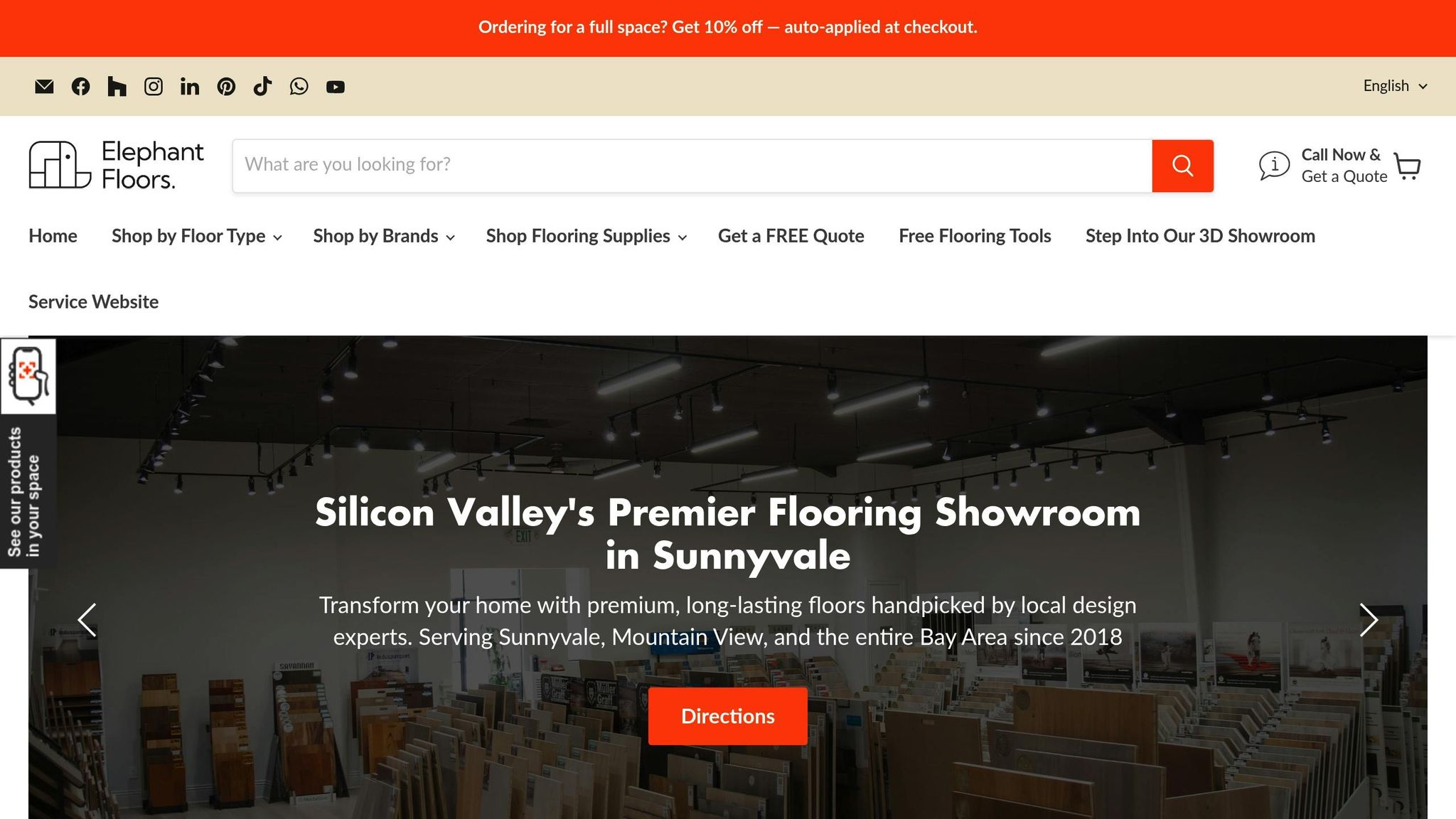
Elephant Floors in Sunnyvale stands out as a trusted provider of high-quality flooring options, including a carefully curated collection of reclaimed wood. Their showroom offers an impressive selection of materials, along with free samples and personalized advice to help you make the best choice. Featuring renowned brands like Gaia Flooring, Vellichor, and Medieval Floors, they cater to a variety of styles and preferences. To top it off, their professional installation services ensure your new flooring looks flawless.
Here’s a breakdown of how leading suppliers of reclaimed wood flooring stack up based on their sourcing practices, certifications, showroom availability, and specialties. This comparison can help you identify the right fit for your project.
| Supplier | Location | Wood Types | Certifications | Showroom | Specialties |
|---|---|---|---|---|---|
| Elephant Floors | Sunnyvale, CA | Curated reclaimed collection featuring premium brands | Quality-focused sourcing | Full showroom with free samples | Expert installation, personalized guidance, top brands like Gaia Flooring and Vellichor |
| Black's Farmwood | Petaluma, CA | Wide plank & engineered reclaimed flooring, beams, barn wood | FSC-certified hardwood available | Available | Custom milling and historical salvage focus |
| The Lumber Baron | Albany & Richmond, CA | Redwood, Fir, Pine, hardwoods, live edge slabs (Elm, Curly Redwood, Acacia) | FSC-certified reclaimed lumber | Richmond location showroom | Urban salvage expertise and live edge specialization |
| Peroba Reclaimed Wood | Richmond, CA | Extensive variety: Claro Walnut, Black Walnut, Redwood, Bay Laurel, Oak, Olive, Cedar, Douglas Fir | Non-toxic finishes focus (Odie's oil, low VOC poly) | Studio hours available | Sustainable sourcing networks and custom finishing |
The table highlights each supplier’s strengths and approach. Elephant Floors stands out for its full-service model, combining a carefully curated selection of reclaimed materials with professional installation and personalized guidance. Their Sunnyvale showroom provides a hands-on experience with free samples and access to premium brands like Gaia Flooring and Vellichor, ensuring high-quality results.
Supplier locations across the Bay Area influence convenience and accessibility. Certifications also vary, with some companies prioritizing FSC-certified materials or historical salvaging, while others emphasize custom milling or eco-friendly finishes like Odie’s oil and low-VOC poly. The selection of wood species is equally diverse, ranging from California redwood and oak to more exotic options like Peroba Rosa and Zelkova.
While some providers focus solely on selling materials, companies like Elephant Floors offer a comprehensive service package, including design consultations, material selection, and professional installation. This approach can simplify your project while ensuring consistent quality and timely delivery. Carefully weigh these factors to choose the supplier that aligns best with your needs.
Reclaimed wood flooring offers a unique blend of sustainability and character that’s hard to find in new materials, making it a standout choice for Bay Area homeowners. Each plank carries its own story, with natural textures and weathered grain that bring warmth and personality to any space. Plus, the aging process that reclaimed wood undergoes naturally enhances its stability, helping it resist warping or gapping - an important feature given the Bay Area’s diverse microclimates.
The aesthetic appeal of reclaimed wood aligns perfectly with the region’s love for authentic, handcrafted materials. Whether sourced from salvaged barn wood, vintage oak, or old-growth redwood, its organic texture adds a timeless charm that synthetic options just can’t match. And while it’s undeniably beautiful, this type of flooring offers much more than just good looks.
One of the standout features of reclaimed wood flooring is its durability. Often sourced from old-growth trees, which grew slowly and developed tight, dense grain patterns, this wood is built to last. Its proven track record - having already endured decades of use in older structures - makes it a smart, long-term investment.
Reclaimed wood is also incredibly versatile, making it a great fit for the Bay Area’s diverse architectural styles. In Victorian and Craftsman homes, wide-plank reclaimed flooring enhances the historical charm while offering modern performance. On the other hand, in sleek, minimalist spaces, the natural textures of reclaimed wood add warmth and contrast, blending beautifully with open layouts and large windows that bring the outdoors in. This adaptability, combined with its durability, makes reclaimed wood a practical choice for nearly any home in the region.
California offers several economic and environmental incentives that make reclaimed wood flooring even more appealing. For starters, indoor finished flooring is exempt from the state’s Lumber Products Assessment, and CALGreen promotes the use of low-carbon materials like reclaimed wood, reducing both costs and environmental impact.
The California Green Building Standards Code (CALGreen) - the first mandatory green building standard in the U.S. - requires reductions in embodied carbon for certain projects, encouraging the use of sustainable materials such as reclaimed wood. Beyond environmental benefits, reclaimed wood also meets standard California building codes. By working with experienced suppliers and installers familiar with local regulations, you can ensure all necessary certifications and documentation are in place, streamlining the process and maximizing the benefits.
With tax exemptions, green building incentives, and a focus on sustainability, the Bay Area provides an ideal environment for reclaimed wood flooring. It’s an option that not only supports eco-friendly practices but also delivers on durability, style, and long-term value.
Reclaimed wood flooring in the Bay Area offers a blend of stunning design, practical benefits, and eco-conscious appeal. Known for its density and stability, reclaimed wood often outperforms new wood options in durability and longevity. Plus, it promotes healthier indoor air quality since it’s free from volatile organic compounds (VOCs) and harmful chemicals often found in some newer flooring materials.
Beyond its practical benefits, reclaimed wood flooring can also elevate your home’s market value - potentially increasing it by up to 2.5% - and offers an impressive 70–80% return on investment.
Bay Area suppliers emphasize sustainability and expert craftsmanship, tailoring their services to fit the region’s diverse architectural styles and climate needs. Whether you’re restoring a classic Victorian in San Francisco or modernizing a home in Palo Alto, these professionals understand how to merge style with functionality.
For personalized assistance, visit the Elephant Floors showroom in Sunnyvale. Their team provides hands-on guidance and showcases a wide range of premium reclaimed wood options, ensuring you find the perfect match for your design goals and practical needs.
Reclaimed wood flooring stands out as an environmentally conscious choice, as it repurposes wood from old buildings and other structures. By doing so, it reduces the demand for cutting down new trees, playing a role in forest conservation and minimizing waste. Essentially, it’s about giving materials a second chance while supporting eco-friendly practices.
When it comes to durability, reclaimed wood has a natural edge. Since much of it originates from older trees that grew in dense forests, the wood tends to be harder and more resilient than many of today’s newer wood options. This toughness allows reclaimed wood to handle wear and environmental changes more effectively, making it a reliable, long-lasting option for flooring in your home.
To make sure your reclaimed wood is responsibly sourced and meets quality standards, check if the supplier provides documentation about the wood's origin and any certifications, like FSC (Forest Stewardship Council) or similar eco-friendly standards. These certifications confirm that the wood has been sustainably sourced and aligns with environmental guidelines.
It's also a good idea to ask the supplier about their sourcing methods and whether the wood has been treated or inspected for issues like pests, contaminants, or durability. Trustworthy suppliers usually conduct thorough quality checks and can offer expert advice to help you choose the right reclaimed wood for your flooring project.
To get reclaimed wood flooring that's both sturdy and looks great, it's important to work with suppliers who emphasize quality and safety. Make sure the wood has been properly processed, kiln-dried, and checked for harmful substances like lead paint or creosote. Also, keep an eye out for suppliers who practice sustainable sourcing and carry relevant certifications - these are good signs of reliability.
It's also worth choosing a supplier known for excellent customer service and expertise. This way, you'll get helpful advice on picking the best materials for your space and reliable support during the installation process. By focusing on these details, you can enjoy flooring that's not just beautiful but also built to last.
Leave a comment