
Call Now &
Get a Quote
Get a Quote

When choosing laminate flooring, thickness matters more than you might think. It influences durability, comfort, sound absorption, and how well the flooring performs over time. Here's what you need to know:
While thickness impacts comfort and stability, the AC rating (abrasion resistance) is equally important for wear resistance. For residential use, aim for at least AC3, and for commercial spaces, go for AC4 or AC5. Installation quality and subfloor condition also play a significant role in the longevity of your flooring.
Thicker laminate also helps smooth over minor subfloor imperfections and reduces noise, especially in multi-level homes. For areas prone to moisture, consider high-density cores and a quality wear layer for added protection.
Key takeaway: Match laminate thickness to your room's traffic levels and subfloor condition for the best results.
The durability of laminate flooring isn’t just about thickness; it also hinges on the quality of its core and wear layer.
Thicker laminate planks are not only sturdier but also provide a more stable and natural wood-like feel underfoot. While thickness is a key factor, the overall performance of laminate flooring depends on a combination of factors, including material quality.
The AC wear rating - which measures the quality of the core and protective surface - often has a bigger impact on wear resistance than thickness alone. For residential settings, a waterproof laminate with at least an AC3 rating is recommended to handle everyday spills and wear. In commercial spaces, an AC4 or AC5 rating is crucial to endure heavy foot traffic.
While thickness contributes to stability and comfort, the wear rating directly determines the flooring’s ability to withstand daily use. Balancing these two factors is essential for achieving long-lasting durability.
Thicker laminate planks do more than just resist wear - they also tackle subfloor imperfections. They can smooth over minor bumps and uneven areas, which helps create a more polished appearance. Additionally, thicker planks absorb impact energy, reducing noise and stabilizing the floating floor system.
For installations on upper floors, pairing thicker laminate with a quality underlayment can significantly cut down on footstep noise in rooms below. Many homeowners notice a clear difference in sound levels when upgrading from thinner laminate to thicker planks.
Thicker laminate also handles minor moisture fluctuations better, making it less prone to warping over time. This added resilience makes it a practical choice for areas where moisture levels may vary.
When considering laminate flooring, thickness plays a crucial role in determining how well it suits your space. The right thickness not only enhances durability but also adds to comfort, especially in areas with varying levels of foot traffic.
For spaces with light to moderate foot traffic, such as bedrooms or home offices, 8mm to 9mm laminate strikes a good balance between durability, comfort, and affordability. In areas with minimal use, like guest rooms, 6mm to 8mm laminate is a budget-friendly choice that still gets the job done. To improve comfort, pairing 8mm laminate with a high-quality underlayment can provide additional cushioning underfoot.
Once you've considered the importance of thickness and durability, follow these three steps to find the perfect laminate thickness for long-lasting performance.
Start by thinking about how much foot traffic each room gets. Who uses the space? How often? What kind of activities happen there? These questions will help you determine the right thickness and durability level.
Also, check the AC rating (ranging from AC1 to AC5) to ensure the laminate can withstand the level of wear your space requires.
The condition of your subfloor is a key factor in choosing the right laminate. Take the time to inspect it thoroughly.
If your subfloor has minor imperfections, thicker laminate (10mm–12mm) can help smooth over small irregularities. Additionally, use a moisture meter to check for high humidity levels - especially in basements or other damp areas. High moisture readings might influence your choice of laminate thickness and underlayment.
Before making a final decision, measure the vertical space in your room and plan for all components. This will help you avoid surprises during installation.
Lastly, factor in potential costs for items like door trims, transition strips, and other materials. With these measurements and plans in hand, you’ll be ready to explore laminate options at Elephant Floors.
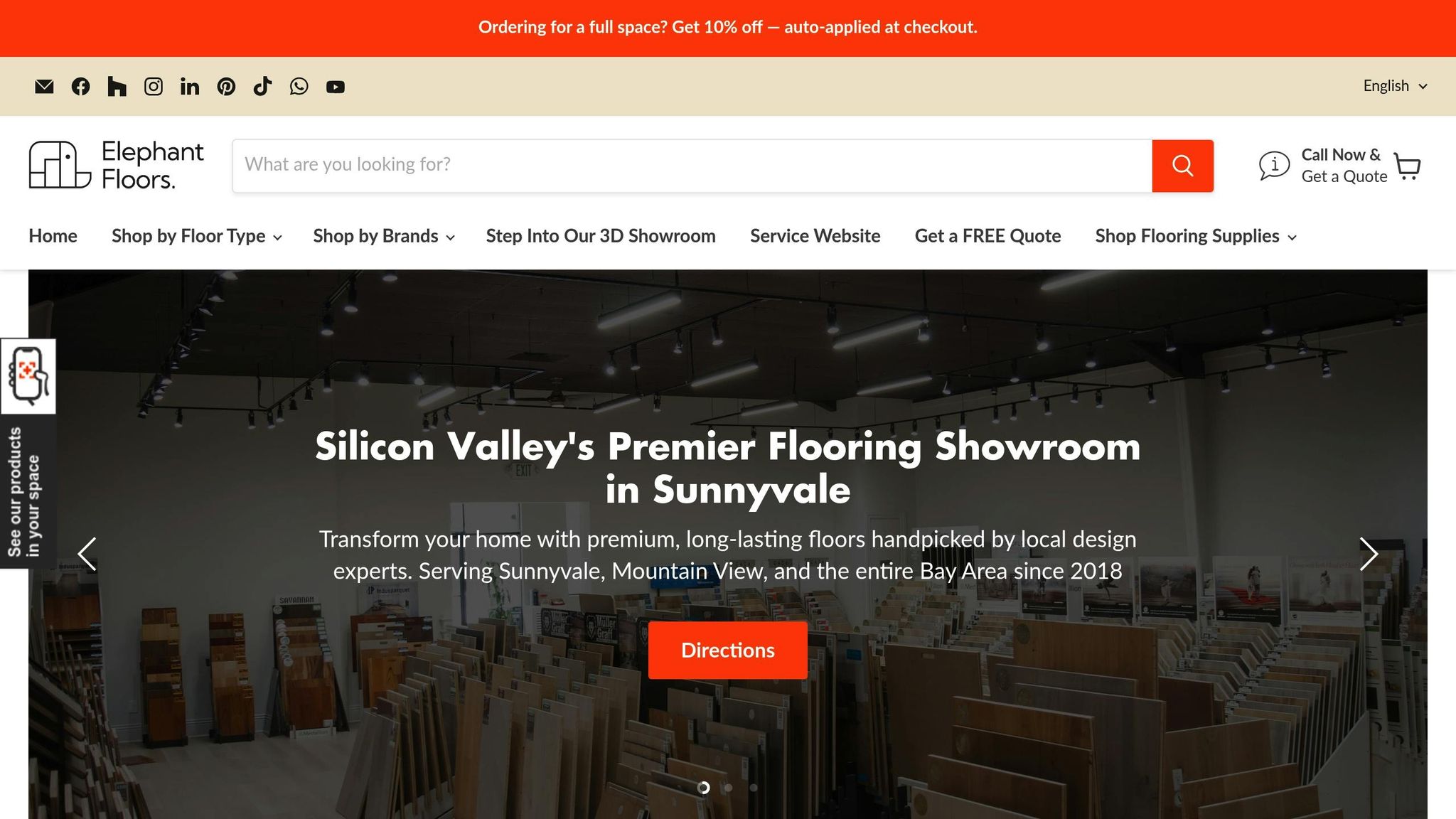
Explore top-notch laminate flooring options in the SF Bay Area with Elephant Floors. Known for their durable solutions, they also offer expert guidance to help you choose the perfect flooring for your space.
Stop by the Sunnyvale showroom to get a hands-on look at various laminate options. Here, you can compare thicknesses like 7+2mm, 8mm, 12mm, and 12.3mm. This in-person experience allows you to assess key features such as stability, sound absorption, and locking mechanisms. These factors play a big role in reducing flex and minimizing that hollow sound often associated with laminate flooring. The knowledgeable showroom team is on hand to help you find the right laminate to match your home's traffic levels and subfloor conditions.
Elephant Floors offers a free sample program, giving you the chance to test laminate options in your own home. This helps you see how the flooring holds up under real-life conditions before making a commitment. When you're ready, their professional installation service ensures the flooring performs at its best.
Elephant Floors carries leading laminate brands like Gaia Flooring, Vellichor, and Medieval Floors. These brands feature thicker planks designed for improved durability, making them ideal for high-traffic areas and homes with frequent furniture movement. Thicker laminates not only resist flexing during installation and daily use but also protect the locking systems for long-term reliability. This is especially important in Bay Area homes, where changes in temperature and humidity can challenge lower-quality flooring. With these premium options, you get a blend of durability and style, ensuring your laminate meets both functional and aesthetic demands.
When choosing laminate flooring, it’s all about finding the right balance between thickness, durability, and the conditions of your home. Thicker planks, such as 12mm or 12.3mm, provide better stability and absorb sound more effectively, making them a great option for high-traffic areas or homes with uneven subfloors. That said, don’t overlook the importance of the AC rating. For instance, an 8mm plank with an AC4 rating can often withstand wear and tear better than a thicker plank with a lower rating, especially in busy households.
Consider the unique challenges your home might face. In the Bay Area, temperature changes and occasional moisture can put lower-quality laminates to the test. Think about your home’s specific needs - traffic patterns, subfloor condition, and whether you’ll need to manage transitions between multiple levels.
To ensure your flooring lasts, a professional installation is key. It not only enhances durability but also ensures the flooring performs as expected over time.
For homeowners in the Bay Area, these factors are especially important. If you’re looking for expert advice, the team at Elephant Floors is ready to help. Stop by their Sunnyvale showroom to compare thicknesses, brands, and styles in person. They also offer a free sample program, so you can see how different options work in your space. With access to premium brands like Gaia Flooring, Vellichor, and Medieval Floors, you’ll find durable, stylish laminate flooring tailored to meet the demands of Bay Area living.
Yes, the thickness of laminate flooring is a crucial factor in its durability and how well it handles moisture. Thicker laminate tends to be sturdier, making it less likely to warp or buckle when exposed to small amounts of moisture. This extra rigidity helps the flooring keep its shape over time, even in spaces with moderate humidity levels.
That said, laminate flooring - no matter how thick - is not completely waterproof. Prolonged exposure to moisture can still cause damage, so it’s essential to address spills or leaks as soon as they happen. To keep your laminate flooring in good shape, focus on proper installation, maintain a dry environment, and clean up any moisture without delay.
The AC rating is a key indicator of how well laminate flooring can withstand wear and tear, including scratches, dents, and the demands of everyday life. Simply put, the higher the AC rating, the tougher the flooring. While the thickness of the laminate doesn’t directly impact its AC rating, thicker boards often bring extra stability and durability, which is especially useful in busy areas of your home.
For most households, an AC3 or AC4 rating strikes a good balance between durability and affordability. Think about the level of foot traffic in each part of your home - areas like hallways or living rooms, which see a lot of activity, might benefit from thicker laminate paired with a higher AC rating. By carefully considering both thickness and AC rating, you can ensure your flooring not only looks great but also stands up to daily life for years to come.
Thicker laminate flooring, generally 10–12 mm or more, can be a great choice for reducing noise in multi-level homes. The extra thickness adds density to the material, which helps absorb sound and limits noise traveling between floors.
But that's not the whole story - underlayment is just as important. Using high-quality underlayments, like foam or rubber, can significantly cut down on both impact noise (think footsteps) and airborne sounds. Together, thicker laminate and a good underlayment create a quieter, more peaceful living space, especially in multi-story homes.
发表评论