
Call Now &
Get a Quote
Get a Quote

Vinyl flooring is the better choice for humid and coastal areas like the SF Bay Area. Here's why:
| Feature | Vinyl Flooring | Laminate Flooring |
|---|---|---|
| Water Resistance | Fully waterproof | Prone to water damage |
| Lifespan | 15–25 years | 8–15 years |
| Maintenance | Simple, no special care | Requires careful upkeep |
| Installation | Straightforward | Needs extra precautions |
For humid areas, vinyl is the more reliable, low-maintenance, and long-lasting option. While laminate may work in dry spaces, its limitations make it less suitable for moisture-heavy environments.
Vinyl flooring stands out in areas with high humidity. Unlike natural materials that absorb water and risk damage, vinyl's synthetic makeup resists moisture, making it a practical choice for coastal homes where dampness is a frequent challenge.
One of vinyl flooring's biggest strengths is its 100% waterproof design. Made from PVC and other water-repellent compounds, it features sealed edges and tight locking mechanisms that stop water from seeping through. This ensures no swelling, warping, or structural damage, even after prolonged exposure to moisture.
Luxury vinyl planks go a step further with a rigid WPC core that resists the expansion and contraction caused by humidity. This stability keeps your floors looking seamless, avoiding the gaps and buckling that can plague other materials during seasonal temperature and humidity changes.
Vinyl's water-resistant properties make upkeep simple. Since water can't penetrate its surface, regular cleaning is as easy as sweeping and occasionally mopping with standard floor cleaners. There's no need for special treatments, sealants, or refinishing.
Its antimicrobial surface is a bonus in damp environments, preventing mold and mildew growth. This is especially useful for coastal homes where fog and high moisture levels are common. The smooth, non-porous surface doesn't support the growth of mold, adding another layer of protection.
Vinyl flooring can last 15 to 25 years, even in tough coastal conditions. The wear layer defends against scratches, stains, and UV damage, while the waterproof core ensures the material stays intact from the inside out. This longevity, combined with its resistance to damage, makes it a reliable choice for long-term use.
Vinyl flooring's adaptability to different subfloors makes it a smart option for homes with varying foundation types, such as those in the Bay Area. Whether you're working with moisture-prone concrete slabs or older wooden subfloors without vapor barriers, vinyl can be installed directly with minimal preparation.
The floating installation method, which uses planks that lock together mechanically, creates a stable surface without relying on adhesives that might fail in humid conditions. This flexibility is especially helpful in coastal regions where daily temperature fluctuations are common.
For homes with subfloor moisture issues, vinyl acts as its own barrier, protecting both the flooring and the living space above from humidity-related problems. This makes it ideal for basements, ground-level installations, and homes built on concrete slabs, where controlling moisture can be difficult.
Vinyl also works well with radiant heating systems, offering an additional way to manage indoor humidity and temperature. Its thermal stability ensures it won't warp or develop gaps when exposed to gentle heating, making it a versatile option for comfortable, year-round living.
Laminate flooring may look great and come at an affordable price, but it struggles in humid environments due to its wood-based core. This core has a tendency to absorb moisture, which can lead to a host of problems. Because of this, extra care is needed when installing laminate flooring in places prone to high humidity.
The core of laminate flooring is typically made from high-density fiberboard (HDF) or medium-density fiberboard (MDF). These materials are particularly sensitive to moisture. When they absorb water, the core swells, which can cause the flooring to warp, buckle, or develop issues like cupping and crowning. Salt air, often present in coastal areas, can speed up this deterioration.
While the top decorative layer and protective coating of laminate flooring provide some moisture resistance, the seams between planks remain a weak point. Once water seeps into the core, the damage is often permanent, as the wood fibers lose their strength and structure.
To install laminate flooring in humid or coastal areas, certain precautions are essential. One key step is using a vapor barrier, such as plastic sheeting, between the subfloor and the laminate. This helps block moisture from the ground. Additionally, leaving proper expansion gaps around the room's edges allows the flooring to expand and contract naturally without causing damage.
Another important step is to acclimate the laminate planks to the local environment before installation. This reduces the risk of moisture-related issues. Maintaining a consistent indoor climate with the help of humidity control or dehumidifiers can also go a long way in protecting the flooring from daily moisture cycles.
In response to these challenges, manufacturers have introduced water-resistant laminate options. These newer products are designed to handle moderate humidity better than traditional laminate. They often feature improved edge seals and specially treated cores to reduce the risk of moisture penetration. While these advancements offer better protection against minor spills and occasional humidity changes, proper installation and maintaining a stable indoor environment are still crucial for ensuring the flooring’s longevity.
When choosing flooring for a humid environment, it's essential to understand how materials handle moisture, salt air, and temperature shifts. Vinyl and laminate may look similar, but their performance in these conditions is vastly different.
| Factor | Vinyl Flooring | Laminate Flooring |
|---|---|---|
| Water Resistance | Completely waterproof - no moisture absorption | Prone to swelling and warping when exposed to moisture |
| Humidity Performance | Excellent - handles high humidity without issues | Poor - requires vapor barriers and controlled indoor climate |
| Coastal Environment Suitability | Ideal - resistant to salt air damage | Limited - salt air can degrade the core over time |
| Installation Requirements | Straightforward - no special precautions needed | Requires vapor barriers, acclimation, and expansion gaps |
| Maintenance in Humid Areas | Easy - standard cleaning methods suffice | Demands careful monitoring and immediate spill cleanup |
| Lifespan in High Humidity | 15-25 years with reliable performance | 8-15 years, but moisture can shorten its lifespan |
| Repair Options | Individual planks are simple to replace | Damage often necessitates replacing entire sections |
| Cost of Ownership | Higher upfront, but minimal long-term expenses | Lower upfront, but higher replacement and maintenance costs |
This breakdown highlights why vinyl is often the better choice for areas with high humidity or coastal conditions.
The comparison makes it clear: vinyl outshines laminate in humid environments. Its waterproof design eliminates the constant worry of moisture damage that laminate flooring owners face. Even water-resistant laminate can't compete with vinyl's complete resistance to humidity.
Over time, vinyl's benefits become even more apparent. You won't need to install vapor barriers, constantly monitor indoor humidity, or replace damaged sections due to moisture. In coastal areas, vinyl holds up against the corrosive effects of salt air, while laminate's wood-based core is more vulnerable to deterioration.
While vinyl may cost more upfront, it saves money in the long run by reducing maintenance and replacement needs. Plus, cleaning is a breeze - no special precautions or products are required, even in naturally humid spaces where spills and moisture are hard to avoid.
Laminate does have its place, particularly in dry, controlled environments where budget is the top priority. But in humid areas, vinyl proves to be the more reliable, low-maintenance, and cost-effective option over its lifespan.
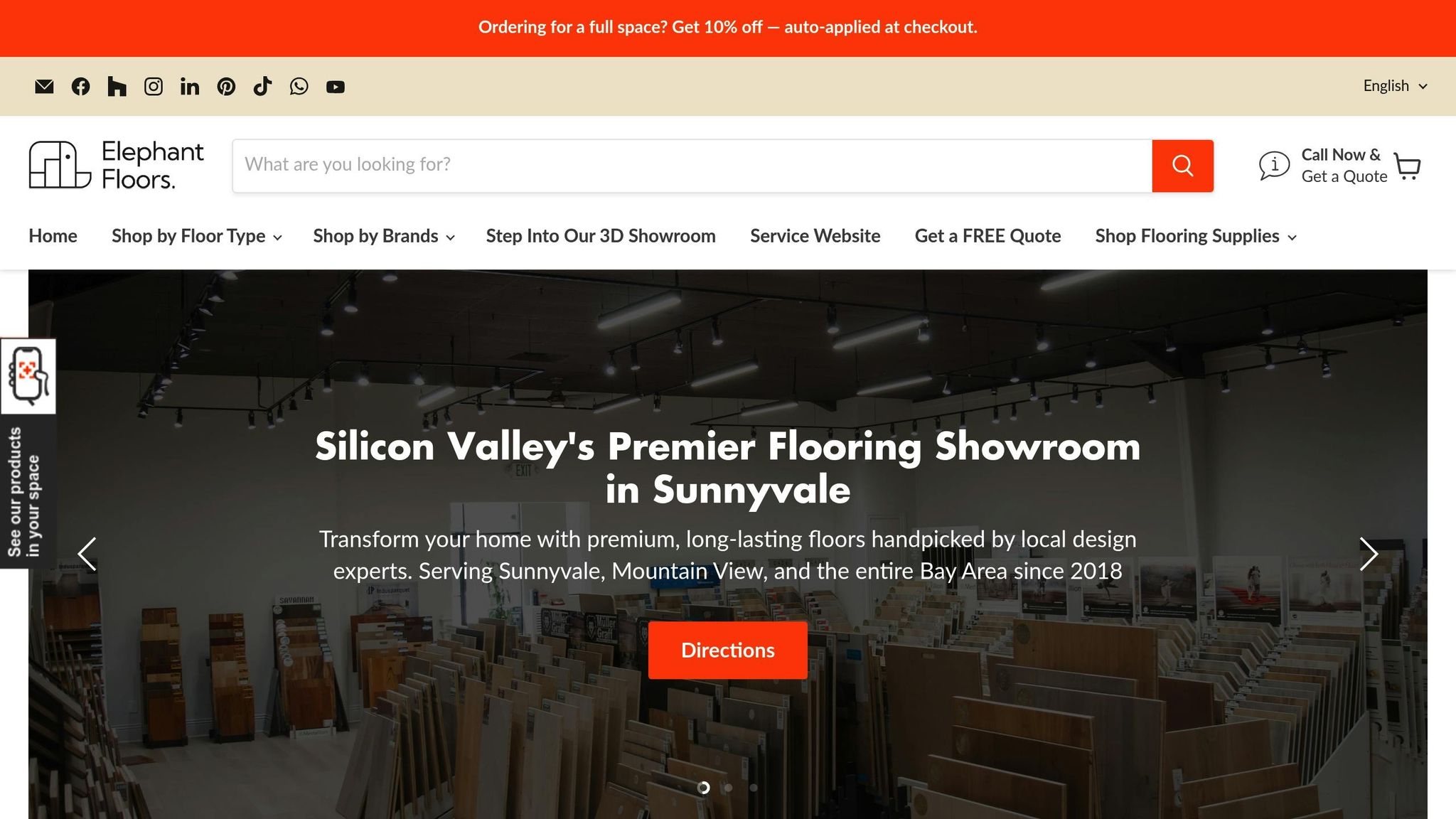
Living in the SF Bay Area comes with its own set of challenges, especially when it comes to flooring. Coastal moisture and fluctuating temperatures can wreak havoc on floors over time. That’s where Elephant Floors steps in, offering solutions tailored to the unique needs of local homeowners. Their understanding of these regional issues ensures they provide flooring options and installations that stand the test of time.
Even the highest-quality vinyl or laminate flooring won’t hold up if it’s not installed correctly, especially in humid conditions. That’s why Elephant Floors prioritizes expert installation, taking into account specific challenges faced by Bay Area homes, like subfloor moisture and acclimation requirements.
But their process doesn’t stop at simply laying down flooring. For example, in February 2025, they completed a kitchen and foyer LVP (Luxury Vinyl Plank) replacement for Rochelle U. in Sunnyvale, CA. The project involved a detailed inspection of the subfloor, meticulous preparation, and leveling. They even documented the entire process with photos for the homeowner’s peace of mind. This level of care ensures that moisture-related issues won’t undermine the installation later. Proper installation also enhances vinyl’s natural resistance to moisture - an essential feature in the Bay Area climate.
"Elephant Floors took the time to inspect our old flooring, explain the process, and show me where the uneven floors were. They also took the time to properly prep and level the floor before laying the new LVP. Further, they sent me pictures of the entire process! That was an amazing surprise! Luis and Alfredo were professional, efficient, and easy to work with during this process. Artur is extremely knowledgeable and thorough."
Their expertise is especially valuable when dealing with emergency repairs. Jim S., a customer who faced water damage, shared his experience:
"Repaired my water-damaged flooring within days of contacting them. The contractors were very professional, friendly, and left our home spotless after completion of work. Highly recommend them for all your flooring needs."
This combination of quick response times and skilled craftsmanship makes Elephant Floors a go-to for homeowners dealing with moisture-related challenges.
While professional installation is key, choosing the right material is just as important. And nothing beats seeing and feeling flooring options in person. That’s why Elephant Floors offers free samples at their Sunnyvale showroom, making it easier for homeowners to compare vinyl and laminate options.
The showroom features a wide selection of premium brands known for their durability in tough conditions. For example, Vellichor offers several SPC (Stone Plastic Composite) vinyl options designed for humid environments, such as the "Vellichor SPC Galaxy Milky Way", "Vellichor SPC GemStone Garnet", and "Vellichor SPC Summit Pavlof". These products combine the look of natural materials with waterproof functionality.
In addition to Vellichor, the showroom highlights other top brands like Gaia Flooring, Medieval Floors, LAGO flooring, BENTHAM PLANK, Triangulo, Pravada Floors, and Lions Floor. These options cater to various styles and budgets while maintaining the durability needed for the Bay Area’s climate.
The personalized guidance offered at the showroom helps homeowners make informed decisions. Anna A. shared her positive experience:
"Great selection of flooring, knowledgeable salespeople. Highly recommended!"
With an impressive 4.8 out of 5-star rating from 101 Yelp reviews, it’s clear that Elephant Floors delivers both quality products and exceptional service.
Julie P. summed it up best when she praised the value and professionalism she received:
"They offer competitive pricing... The crew was courteous and did great work. I highly recommend Elephant Floors. I couldn't be happier."
When choosing flooring for humid or coastal environments, vinyl stands out as the better option compared to laminate. Here's why: vinyl is made from plastic polymer (PVC), which makes it completely waterproof and resistant to moisture. On the other hand, laminate has a wood-based fiberboard core that can swell and warp when exposed to high humidity or water.
Vinyl also outlasts laminate, with a lifespan of 15–25 years compared to laminate's 10–15 years. While vinyl costs a bit more - typically $2–$7 per square foot versus laminate's $1–$5 - the added durability and water resistance make it a smarter long-term investment.
One of vinyl's key advantages is its dimensional stability. It doesn't expand, contract, warp, or buckle even with significant humidity changes or direct water exposure. This stability helps protect your subfloor by keeping moisture out, which significantly lowers the chances of mold and mildew forming.
Given these benefits, it's clear why professional installation and local expertise are so important in humid areas.
For Bay Area homeowners dealing with coastal moisture and fluctuating temperatures, expert advice can make all the difference. Stop by Elephant Floors' Sunnyvale showroom - voted "Best Flooring Store of Sunnyvale 2022" with over 32 five-star ratings - for personalized recommendations and access to premium brands like Vellichor SPC.
Vinyl flooring is a smart pick for humid areas because it's 100% waterproof and handles moisture like a pro. Unlike laminate, which can warp, buckle, or swell when exposed to humidity or spills, vinyl stands up to these challenges with ease.
Laminate flooring may be tough in many situations, but its wood-fiber core can soak up moisture over time, leading to damage. If you’re in a humid or coastal region, vinyl flooring provides a dependable and durable option that’s built to handle the environment.
When installing laminate flooring in areas with high humidity, taking precautions against moisture is key. Start by using a moisture-resistant underlayment along with a vapor barrier to guard against water damage. Ensure the subfloor is clean, level, and properly prepared to create a solid base for the flooring.
Keep indoor humidity levels between 30% and 60% to minimize the chances of warping or gaps forming. Additionally, leave expansion gaps around the edges of the flooring to accommodate natural expansion and contraction as moisture levels fluctuate. These steps can significantly improve the durability and performance of your laminate flooring in humid environments.
Vinyl flooring stands out as a smart choice for humid environments thanks to its strong water resistance and long-lasting durability. Unlike laminate, which is prone to swelling or warping when exposed to high humidity, vinyl is specifically built to handle moisture. This makes it a reliable option for coastal regions or other areas with consistent humidity.
Although vinyl often comes with a higher initial price tag, its resistance to water damage means fewer repairs or replacements down the road. Over time, this durability translates to better value, particularly in spaces where humidity is a persistent challenge.
发表评论